
|
|
#1
 12-22-2011, 09:57 PM
|
||||
|
||||
 picking a bass..
Well, after months, days, weeks, years of going back and forth, I have finally (maybe, lol) picked out my main bass and its back-up which I will use for Jazz as well.
 Although I have used several basses over the past few years as regulars as well as a few one-shots just for testing, I think I have to pull two down from the sale pages (did that already) and just stick with them for everything I have to play, not counting road-testing basses on a gig or two for evaluation. This comes mainly from a personal bass-to-body comfort standpoint and not just sound alone. If it was sound only, it would be two other/better basses I have but, they are not as comfortable in MY hands as the ... drum roll please ... the Hart and the Neuner. These two are the most comfortable basses to me that I own and have owned. The Gilkes was great but not as good a fit. The Martini was a better fit but I preferred the neck of the Hart. The bigger basses I have and had may have superior power but require more lugging around as opposed to a full 3/4 or 7/8ths (which is a 3/4 in Europe). At the 2009 ISB I asked a couple of seasoned Orchestra Pros for some personal Tips to help my re-build my playing and after a mini-audition (a minute or two) I was told by one 'slow down' when practicing (to build my accuracy back up from its deep sleep in NYC) and the other to 'pick and play only ONE bass' which then was the Martini (now sold), a bass very similar in feel and size to both the Hart and Neuner. They both agreed as well with the others assessment as well. So, SLOW DOWN and pick ONE Bass.  .. So, it's down to TWO! .. So, it's down to TWO!  Better, right? Better, right? The Hart and Neuner both have similar string lengths but the Hart is more of an Eb neck-heel and the Neuner between D and Eb. The neck profiles are not the same and neither are the bridge curves and spacings but, I can move back and forth between them and adjust in seconds. The Hart neck is the best for me I think feel-wise. The Neuner body-to-body fit is the best of my collection as well. For some reason, watching others play my basses, they never choose the same as the best. One says Hart, another Tarr and another Storioni, etc. So, it's a personal thing and now, I have two basses that I can switch between in comfort. They are not the best or loudest basses I have or have had but they are the ones that I can PLAY the best on. One time I asked my son (a bass player) to listen to two basses and I think they were the Hart and maybe Gilkes(?). He said the Gilkes(?) sounded better (that day, lol) but, I PLAYED the Hart better. 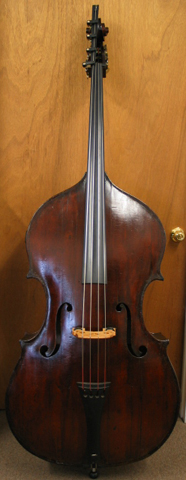 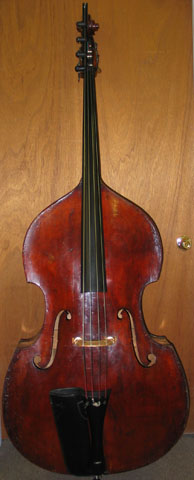 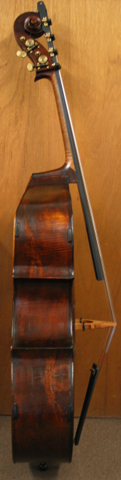 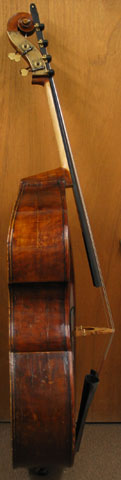 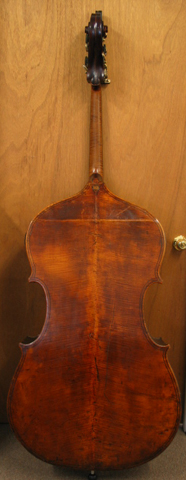 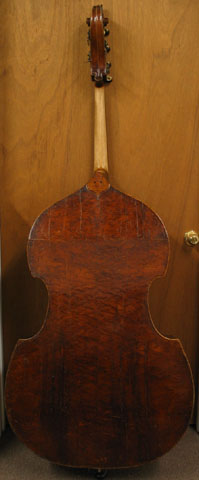 Comments and discussions are welcomed. I realize fully that not everyone can have such basses to choose from either owned or when shopping but just when you think you have just about any bass you need, you discover that most of them are just not for you regardless of how great they may be for someone else! .. We/I call that, Inventory! 
__________________
Ken Smith ~ http://www.kensmithbasses.com http://www.kensmithbasses.com/doublebasses/ http://www.facebook.com/KenSmithBasses https://www.instagram.com/kensmithbasses/ https://www.facebook.com/ken.smith.904750 

|
|
#2
12-24-2011, 09:57 AM
|
|||
|
|||

Ken, with all due respect, I think it is futile for you, personally, to decide on one bass. You will feel neglected after awhile if you can't take one of your stock out for a joyride occasionally.
I think you derive as much enjoyment out of the study of the diversity of the instruments and working on them as actually playing them. I say this out of respect, because I'm the same way with electric guitars an basses. Over the years, I not only found it difficult to settle on one "stage" instrument, but I have about as much fun tinkering with them, helping my friends and colleagues get the best tone for them from working on their setups and electronics, and experimentation in general. Even RIC let me post some wiring variations on their factory website that have proven quite popular!!! Ken, if you were gunning for principal of even a regional symphony, I'd take their advise completely: pick one, get used to its good points, bad points, quirks and ideosyncracies and all, bury yourself in it, and come out the other end of the tunnel ready for any audition anywhere. But you're not. You're having too much fun with your toys. I appreciate that. I'd love to be there myself. I have been in other contexts. I enjoy your discussions and digressions as you post your impressions of various instruments, how they are set up and strung, what gigs you're using them on, etc. Have fun with your toys!!! Happy Holidays!
|
|
#3
12-24-2011, 10:37 AM
|
||||
|
||||
 well..
Quote:
 I ask because I happen to actually be a Principal in one Orchestra and I share the Principal duties with another. Both orchestras pay per service. The main one is an all-paid Orchestra. The other is not but all of the Basses are hired in the 2nd Orchestra. In the last concert with 6 Cellos and 4 Basses, 8 of 10 players were hired, myself included. There are the major symphonies and then the not so major but full time orchestras around the country. Currently I think it's only about 20 or so services a year in the main orchestra where I am and have been Principal for several years. The other Orchestra actually has a bigger season but most players are just within the community. Switching basses makes it difficult to play in tune for the most part as they vary greatly in the String length and body size, sometimes making even an average mensur difficult to handle. If I had to make my living at this now like I did in the past, it would be more important but, if I played out of tune due to using just any bass any night, then perhaps I wouldn't be one of the paid players (ringers they call us) on the concerts nor would I be Principal in an orchestra that about once a year, I have some sort of solo in. As far as the occasional joy ride with one of the other basses, I do that as well. Like I mentioned, I do take out almost all of my basses at one time or another but playing in an Orchestra, you always have music to practice year round. That is why you need one main bass to know where all the notes are and keep it consistent. This advice came from players that have played in major symphony orchestras. In a section of players, it is even harder than playing alone because we all have to be in sync as well as be in tune. Thanks for your comments and enjoy the holidays. Hey, should we talk about picking just one 'main' Bow as well?
__________________
Ken Smith ~ http://www.kensmithbasses.com http://www.kensmithbasses.com/doublebasses/ http://www.facebook.com/KenSmithBasses https://www.instagram.com/kensmithbasses/ https://www.facebook.com/ken.smith.904750
|
|
#4
12-24-2011, 07:26 PM
|
||||
|
||||
 also..
I have a few other basses in restoration yet to be tried for personal comfort as well as post-restoration tone and capability. One bass in particular is a Gamba shaped Italian, probably from Naples, early-mid 19th century.
When reaching around to play, I judge it more from the back and sides than from the top although the arch or the top combined with the back if round and of course the neck set and angle sets the Girth of the bass in which to reach and play with the Bow. I actually measure these things 'dry' as well as with my hands on the bass to see which has more measured reach/girth as compared to one another. The upper bouts of the Italian was cut a long time ago from a broader outline. Have a look and tell me what you think. 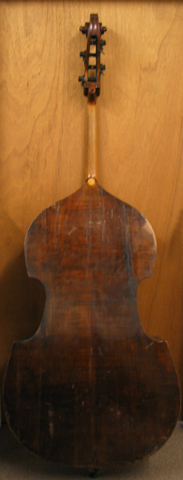 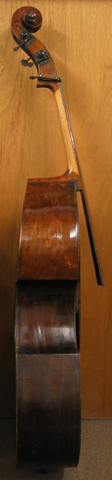 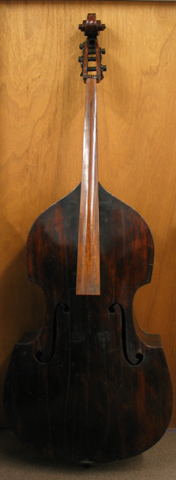 Here are the main measurements that to me matter the most; .................Mittenwald ............ Neapolitan Upper Bout: 21 1/4" ............... 19 7/8" Rib depth: 8 1/4" to 6 1/4"nk ..... 8 1/2" to 7 7/8"nk St.Length: 41 3/4 ................... 41 1/2" ------------------------------------------------------------ Secondary measurements of less importance for feel; Top Length: 44" ..................... 44 3/4" Center Bout: 14 3/4" ............... 14" Lower Bout: 28" ..................... 27" ------------------------------------------------------------ The Italian is slightly smaller in 2 of 3 areas in each list. The Italian is bigger however in Rib depth and Body length. The Rib depth and Body length might add to the sound but it also adds to the girth to reach around. Also, being wider at the Neck is not always a plus concerning playability. The German has slightly more arch in the Top over the Italian so that might balance out the slight difference in Rib depth. I will not know how the Italian bass feels in comparison until it comes out of restoration and is fully set-up. I did play it briefly a few years ago just before it went into repair. It seemed to have promise despite the rough life it had prior, partially at the hands of bad and amateur repair peoples. All this will get corrected less some cosmetic things that can only be suppressed but not erased. Personally, I don't care as much about the looks of a bass I play out as much as I do the sound and feel. If this Italian comes out as predicted, it could easily replace both the Hart and Neuner basses which is just fine with me. 
__________________
Ken Smith ~ http://www.kensmithbasses.com http://www.kensmithbasses.com/doublebasses/ http://www.facebook.com/KenSmithBasses https://www.instagram.com/kensmithbasses/ https://www.facebook.com/ken.smith.904750
|
|
#5
12-25-2011, 04:37 AM
|
|||
|
|||
|
I think focusing on one bass is a great idea. It really pays off in performance as I find an unfamiliar bass can be a distraction. I would rather play one great bass than several great basses. I also find switching basses can cause physical problems like back pain.
If I did have two I would aim to get the string length and neck stop the same and not worry about the body shape. Saying that, it's a nice problem to have and if I did have a room full of basses I think I could cope :-)
|
|
#6
12-25-2011, 09:59 AM
|
|||
|
|||
|
1 bass is enough
I agree with Geoff about one bass. All the greats (well most) on almost every instrument have one main axe, look at yoyo mah & jaco. On a side note the hart is a lovelly instrument & a great choice for a main db. I would love to hear it, you should get someone at your shop to take a video of you playing next time you have her out for practice or rehersal so we can hear it ken.
|
|
#7
12-25-2011, 05:44 PM
|
|||
|
|||
|
Ken, I apologize if I offended you. I never picked up from all your posts that you are, indeed, a principal in a couple of different ensembles.
|
|
#8
12-25-2011, 06:13 PM
|
||||
|
||||
|
Regional?
Quote:
Found this as well. http://ropaweb.org/about/guiding_principles/ Usually it is all Union but the orchestras around here are mixed with union professionals, retired or non-union pro or semi-pro and converted kept-on community players that are non-union as well. It's a mixed bag I think. In the 20 years I played in NYC I did actually do a tiny bit or Orchestra work there as well. Not in the Majors but one Community orch. would hire Pros to fill in and were paid as Union Trust Fund concerts. I was an AFM/local 802 member from 1968 (joined when I was 16) till 1988 when I first retired from playing. One time after meeting the Principal of the Radio City Orchestra, I got called to sub for him. Just 2 basses there and the old Venue was 4 shows a day. Morning/10am?, Noon, Matinee and evening/8pm?. It was a Stage show with Orchestra, the Rockettes and then a Movie on the giant screen. Later, Radio City went to a B'way schedule of 8 shows a week in which I worked on as well. So, I played as Sub-Principal, Only Bassist, Electric in Rhythm section, no DB for that Venue, the famous Christmas shows and others. I worked there on and off as it wasn't the best pay but it was work when you needed it. I also worked on some dates for Movie Scores in a Bass section or 2 to 4 basses as well as on Jingles from 1 to 3 basses that I recall. I was young, very young but I made a living and was one of the only guys that played all styles, both basses and could read as well as show up on time, most of the time.. Now that I am back playing, I am playing in a few local Orchestras and loving it. My old Bass I had back then sold for nearly $200k a few years ago to a European Orchestra. I had sold it after retiring a long long time before that but I did find it recently. So, you know now that I had not only a good bass then but a GREAT bass amongst good basses. In all the jobs I played and teachers I studied with, no one had a better bass but I has heard of them being around. I was lucky to find it, own it, care for it and use it daily to make my living. Now, it has a new family and is well loved as well. Back to picking a Bass, having several basses of similar string lengths is a plus. Sometimes a particular piece is easier to play on one bass than another despite not being the best sounding of the group. I did some of Handel's Messiah earlier in the year and used the Storioni. Most all other times, I did my concerts on the Hart because of the Eb neck heel The heel of the Hart being lower than the others to transition into thumb position and the color of the tonal spectrum. Many people will say the Storioni is the best and loudest bass BUT, the Hart is the sweetest and not much less power, just different, deep and smooth as well. The Neuner is a good bass for all around things and jazz as well. I use it for most rehearsals but only on occasion in concert. Once I put on that Tux and bow tie, I need a bass to match!
__________________
Ken Smith ~ http://www.kensmithbasses.com http://www.kensmithbasses.com/doublebasses/ http://www.facebook.com/KenSmithBasses https://www.instagram.com/kensmithbasses/ https://www.facebook.com/ken.smith.904750
|
 |
| Currently Active Users Viewing This Thread: 1 (0 members and 1 guests) | |
|
|


 Linear Mode

